Cute Mandala Patterns: Versatile Digital Assets for Creative Professionals and Everyday Makers
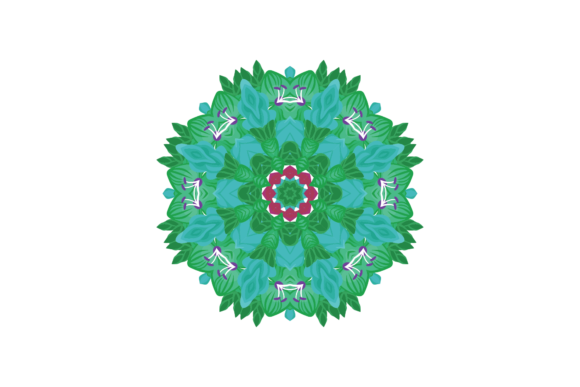
Across design studios, classrooms, craft rooms, and small business workspaces, cute mandala patterns have emerged not as fleeting trends—but as quietly indispensable visual tools. Unlike traditional mandalas rooted in spiritual symmetry or sacred geometry, these iterations balance precision with playfulness: soft curves, rounded motifs, friendly florals, and subtle whimsy—rendered with technical clarity and creative flexibility. Their growing adoption reflects a broader shift in digital asset expectations: users no longer settle for static images. They seek editable, cross-platform-compatible, production-ready files that integrate seamlessly into diverse workflows—from laser-cut greeting cards to classroom bulletin boards, from sublimation-printed apparel to interactive learning modules.
Why Format Diversity Matters More Than Ever
The six included file formats—AI, EPS, SVG, JPG, PNG, and DXF—are not arbitrary options. Each serves a distinct functional role in today’s fragmented creative ecosystem. Understanding their strengths helps users avoid workflow bottlenecks, licensing missteps, or quality loss during scaling or conversion.
- AI (Adobe Illustrator): Ideal for designers who need full vector control—adjusting anchor points, recoloring individual petals, or expanding stroke weights without pixelation. Industry-standard for print production and brand asset libraries.
- EPS: A legacy but still vital format for compatibility with older vector software and certain large-format printers. Retains scalability and supports spot color separation—critical for screen printing or embroidery digitizing.
- SVG: The native language of the web. Perfect for responsive backgrounds, animated UI elements, or embedded illustrations in educational apps. Lightweight, accessible, and compatible with modern CSS and JavaScript frameworks.
- JPG: Optimized for high-fidelity raster display—ideal for social media posts, digital presentations, or mockups where transparency isn’t required. Balanced compression preserves detail while keeping file size manageable.
- PNG: Delivers lossless quality with alpha transparency. Essential for overlaying patterns onto photos, creating branded stickers, or designing layered digital scrapbooking kits.
- DXF: The bridge between digital design and physical fabrication. Used directly by CNC routers, vinyl cutters, and laser engravers—enabling educators to cut mandala stencils from acrylic, makers to etch patterns onto wood, or small businesses to produce custom jewelry templates.
This multi-format approach reflects real-world usage—not theoretical convenience. A textile designer may begin in AI to adjust repeat spacing, export SVG for a client-facing website preview, then generate DXF for prototyping a woven border on a laser-cut loom accessory. A middle school art teacher might open the PNG version in Google Slides to annotate symmetry concepts, then switch to the SVG file to animate rotational transformations in a student coding project.
Practical Applications Across Disciplines
Cute mandala patterns thrive where aesthetics meet utility—and their adaptability spans professional, educational, and personal contexts.
Educational Integration
In STEM and arts-integrated curricula, these patterns serve as tactile entry points to mathematical thinking. Rotational symmetry, radial tessellation, and fraction-based segment division become visible, manipulable concepts—not abstract formulas. Educators use the SVG files in interactive whiteboard software to rotate, reflect, or isolate layers; the DXF versions let students physically construct 3D mandala models using low-cost laser-cut cardboard. One Montessori classroom in Portland reported improved spatial reasoning scores after introducing weekly “mandala deconstruction” challenges using the editable AI files—students reassembled broken segments into coherent wholes, reinforcing pattern recognition and geometric vocabulary.
Small Business & Product Development
For entrepreneurs launching handmade goods, cute mandala patterns reduce time-to-market without sacrificing uniqueness. A ceramicist in Asheville uses the EPS files to trace precise bisque-fired decals onto mugs; a stationery brand in Toronto imports the SVGs into Canva to auto-generate seasonal greeting card variants—changing only color palettes while preserving alignment and proportion. Because each file maintains the original 1920 px × 1280 px canvas, scaling for Instagram carousels (1080×1350), Etsy banners (3360×1680), or printable planners (8.5×11 in at 300 DPI) requires no recomposition—just intelligent resizing within native software.
Hobbyist & Therapeutic Use
Beyond commercial application, many users value these designs for mindful creation. The clean vector paths allow effortless tracing onto watercolor paper or fabric transfer sheets. Unlike hand-drawn mandalas prone to uneven line weight or drift, the digital base provides structural confidence—freeing attention for color choice, texture layering, or rhythmic repetition. Occupational therapists report increased engagement when clients use printed PNG versions as coloring guides, particularly for fine motor development or anxiety reduction. The consistent 1920×1280 resolution ensures crisp detail even when enlarged for low-vision users.
Design Integrity and Technical Considerations
Not all mandala assets deliver equal reliability. These cute mandala patterns are built with production rigor in mind:
- Non-destructive layers: In AI and EPS files, background, outline, and fill elements remain separate—allowing users to toggle visibility, apply gradients selectively, or convert strokes to outlines without affecting adjacent shapes.
- CMYK + RGB readiness: Print-ready color profiles are embedded where applicable, avoiding unexpected hue shifts when moving from screen to press.
- Optimized path structure: No unnecessary anchor points or compound paths—reducing lag in editing software and ensuring smooth cutting paths in DXF-driven machines.
- Transparency-aware exports: PNGs include proper alpha channels; SVGs preserve opacity settings without fallback rasterization.
This attention to underlying structure means users aren’t just receiving pretty pictures—they’re receiving toolkits. A researcher studying visual perception might extract individual petal vectors to test recognition thresholds across age groups. A UX designer could embed an animated SVG mandala as a loading indicator, leveraging its inherent symmetry to convey calm progress rather than frantic motion.
Workflow Efficiency Without Compromise
Time is the most constrained resource across all user types—whether a freelance illustrator juggling three client revisions or a parent preparing Sunday craft activities. These files eliminate common friction points:
There’s no need to trace low-res JPEGs, wrestle with mismatched DPI settings, or pay for third-party vector conversion services. The uniform canvas size simplifies batch processing: drag-and-drop into Adobe Bridge or Affinity Photo for bulk resizing, or import directly into Cricut Design Space or Silhouette Studio without manual canvas adjustment. Even non-designers benefit—the JPG and PNG versions open instantly in free tools like Photopea or Microsoft Paint, enabling quick cropping, contrast tweaks, or collage assembly.
Crucially, editability doesn’t mean complexity. The patterns avoid excessive nesting or obscure effects. Stroke widths remain consistent and scalable; color swatches follow logical naming conventions (e.g., “Petals-LightPink,” “Center-Gold”); and grouping follows intuitive hierarchy—outer ring, mid-ring, center motif—so users can isolate components without hunting through layers.
Looking Beyond Decoration
At their best, cute mandala patterns function as visual infrastructure—supporting deeper goals: fostering focus through repetition, communicating care via thoughtful detail, or democratizing design access for those without formal training. Their success lies not in ornamental excess, but in quiet precision: balanced proportions, harmonious spacing, and intentional simplicity that invites interaction rather than intimidation.
Whether used to calibrate a student’s first laser-cutting project, illustrate a chapter on cultural symbolism in a digital humanities course, or add warmth to a telehealth waiting room background—their value multiplies when matched with the right format for the task at hand. And because every file retains fidelity across scales and platforms, they grow alongside the user’s evolving needs—no re-purchasing, no version confusion, no lost detail.
That reliability—technical, aesthetic, and pedagogical—is what transforms a decorative motif into a durable creative resource. It’s why these cute mandala patterns continue appearing in lesson plans, product prototypes, therapy sessions, and studio portfolios alike: not as ornaments, but as quietly capable collaborators in making, teaching, healing, and expressing.