Patterns Love Valentine’s Day Watercolor Digital Papers
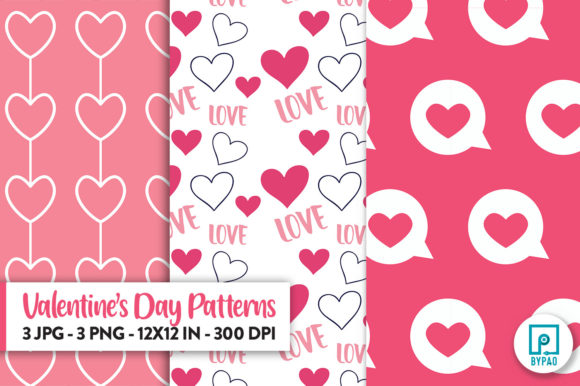
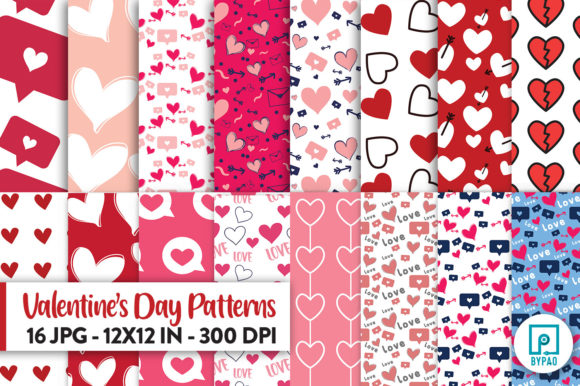
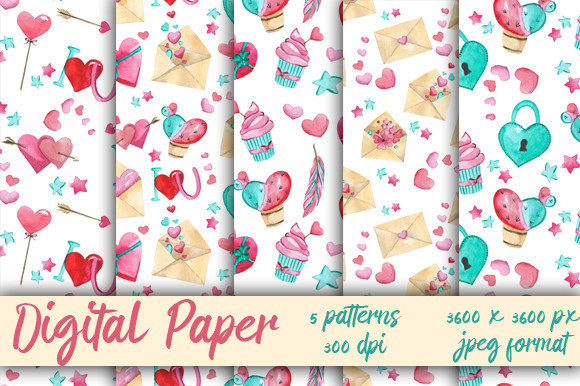
Patterns Love Valentine’s Day Watercolor is a curated digital product consisting of five high-resolution, seamless watercolor-style patterns designed specifically for Valentine’s Day themes. Each pattern is delivered as a JPEG file at 3600×3600 pixels with a resolution of 300 dpi—suitable for both digital and print applications. The collection emphasizes soft, romantic aesthetics: think delicate florals, subtle hearts, gentle washes, and muted pinks, reds, creams, and blush tones—all rendered in an authentic watercolor texture.
Who Might Consider This Collection?
This set appeals most to designers, crafters, and small-business owners who need ready-to-use, themed background assets without investing time in custom illustration or pattern creation. Common use cases include designing greeting cards, social media graphics, printable planners, wedding stationery, fabric mockups, or packaging for seasonal products. It’s especially relevant during the lead-up to Valentine’s Day—typically November through February—when demand for cohesive, on-brand visual elements rises.
Key Benefits
- Seamless tiling: Each pattern repeats smoothly edge-to-edge, making it practical for large-format backgrounds, website tiles, or fabric design without visible joins.
- High-resolution output: At 3600×3600 pixels and 300 dpi, the files support professional printing—ideal for physical products like invitations, notebooks, or gift wrap.
- Thematic consistency: All five patterns share a unified color palette and watercolor aesthetic, simplifying visual cohesion across multiple projects or product lines.
- Digital convenience: Immediate download and compatibility with common design tools (e.g., Adobe Photoshop, Illustrator, Canva, Procreate) reduce setup time.
Important Considerations and Tradeoffs
While Patterns Love Valentine’s Day Watercolor offers practical advantages, users should weigh several factors before purchasing.
First, the JPEG format limits flexibility compared to vector or layered PSD files. Users cannot easily recolor individual elements, adjust opacity per layer, or isolate motifs—only the overall tone can be modified via global adjustments in editing software. If your workflow depends on editable components (e.g., extracting a single heart motif to use independently), this collection may not meet that need.
Second, color fidelity varies across devices. As noted in the product description, “colors may vary slightly due to different color monitors.” Designers preparing files for commercial print should soft-proof using CMYK profiles and consider ordering a physical test print before mass production—especially if brand colors require precise matching.
Third, the collection contains only five patterns. While sufficient for focused campaigns, users managing diverse or long-term seasonal needs may find the scope limited. There are no alternate colorways (e.g., navy-and-gold valentines), no monochrome versions, and no additional motifs beyond the core watercolor theme.
When This Collection Is a Strong Fit
Patterns Love Valentine’s Day Watercolor works well in situations where speed, thematic alignment, and print readiness are priorities. For example:
- A small stationery business launching a limited-edition Valentine’s card line and needing cohesive, printable backdrops within a tight timeline.
- A content creator building Instagram story templates or Pinterest pins for a romantic-themed digital planner—and wanting consistent, on-trend visuals without licensing concerns.
- An educator or therapist designing printable self-care worksheets with gentle, uplifting visuals for February programming.
In each case, the value lies in reducing repetitive design labor while maintaining aesthetic quality appropriate for the occasion.
When Alternatives May Be Worth Exploring
Consider other options if your goals involve greater customization, scalability, or broader stylistic range.
If you need editable vector elements—such as scalable hearts, typography-friendly swashes, or motifs you can rearrange or recolor individually—a vector-based clipart pack or SVG bundle would offer more control than JPEG-based seamless patterns.
If you’re designing for web-only use (e.g., website backgrounds, UI elements), lower-resolution PNGs or CSS-generated patterns might suffice—and reduce file size and loading time. High-res 300 dpi JPEGs, while excellent for print, are unnecessarily large for screen display alone.
If your project spans multiple holidays or requires year-round versatility, a larger, multi-seasonal watercolor pattern library—or a subscription-based asset service—may provide better long-term value than a single-theme pack.
Making a Practical Decision
To determine whether Patterns Love Valentine’s Day Watercolor aligns with your needs, ask yourself three questions:
- What’s my primary output medium? If print is central—especially for physical goods like cards, labels, or textiles—this collection’s resolution and seamless structure are well-suited. If output is exclusively digital and performance-sensitive, evaluate whether the file size justifies the quality gain.
- How much customization do I need? If you’ll apply only minor adjustments (e.g., brightness, contrast, or global hue shifts), JPEGs are functional. If you anticipate frequent motif isolation, masking, or layered effects, seek layered or vector alternatives.
- Is this a one-time or recurring need? For occasional, campaign-specific work, a targeted pack like this offers efficiency. For ongoing seasonal design work, assess whether investing in broader libraries—or learning to create simple seamless patterns yourself—offers better scalability.
Also consider reviewing sample images carefully—not just for style, but for repeat scale. A 3600×3600 pixel tile may appear dense or sparse depending on how the pattern is constructed. Look for examples showing the repeat in action (e.g., tiled across a mockup) to gauge visual rhythm and spacing before purchase.
Final Thoughts
Patterns Love Valentine’s Day Watercolor is a purpose-built resource—not a universal solution. Its strength lies in delivering reliable, print-ready, thematically coherent patterns with minimal friction. It serves users who prioritize execution speed and seasonal relevance over deep customization or cross-holiday flexibility. As with any digital asset, its usefulness depends less on inherent qualities and more on alignment with your specific project constraints, technical requirements, and creative workflow. Evaluating it against those concrete criteria—not general appeal—leads to more informed, effective decisions.