Why Mandala Patterns Motif Cute Resonates Across Creative Disciplines—and How to Use It Effectively
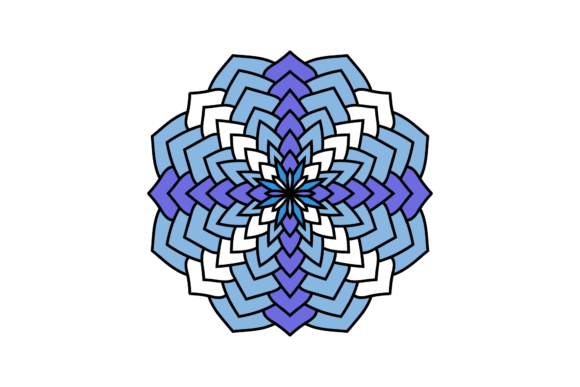
At first glance, Mandala Patterns Motif Cute may evoke images of playful symmetry—soft curves, gentle florals, and balanced repetition wrapped in approachable charm. But beyond its visual appeal, this motif represents a convergence of ancient symbolism, modern design sensibility, and practical versatility. Unlike rigid geometric mandalas rooted solely in spiritual tradition, the “cute” iteration softens form without sacrificing structure—making it uniquely suited for diverse applications across digital art, education, product design, branding, and personal expression.
Rooted in Tradition, Reimagined for Contemporary Use
The mandala—a Sanskrit word meaning “circle”—has historically served as a tool for meditation, ritual, and cosmological representation across Hinduism, Buddhism, and Indigenous traditions. Its radial symmetry reflects unity, wholeness, and cyclical growth. What distinguishes Mandala Patterns Motif Cute is its intentional reinterpretation: simplified linework, rounded contours, subtle whimsy (think tiny stars, smiling petals, or gentle crescents), and harmonious spacing that avoids visual clutter. This isn’t dilution—it’s adaptation. Designers today aren’t replicating sacred diagrams; they’re borrowing structural intelligence and infusing it with warmth and accessibility.
Consider how educators use similar motifs in classroom materials: a “cute” mandala pattern can anchor a mindfulness worksheet for elementary students, where symmetry becomes a tactile lesson in balance and pattern recognition—not abstraction. Or how small-business owners apply it to packaging labels for artisanal teas or organic skincare—communicating care, intention, and natural harmony without overt spirituality.
Practical Advantages Embedded in the File Package
The value of Mandala Patterns Motif Cute extends far beyond aesthetics—it lies in its technical readiness. The six included digital files are not just formats; they’re functional pathways into different workflows:
- AI (Adobe Illustrator): Ideal for designers who need full vector control—adjusting stroke weight, expanding paths, or integrating elements into larger brand systems.
- EPS: Ensures backward compatibility with older design software and print vendors, especially useful for collaborative production environments.
- SVG: Optimized for web use—scalable without loss, lightweight, and compatible with CSS animations or interactive interfaces (e.g., hover effects on a boutique website).
- DXF: Critical for makers and fabricators—enables precise cutting on laser engravers, CNC routers, or vinyl cutters for physical products like wooden coasters, acrylic jewelry, or embroidered patches.
- JPG: A universally supported raster option for quick mockups, social media posts, or email newsletters—especially helpful when sharing previews with non-design stakeholders.
- PNG: Transparent background support makes it perfect for overlaying on photos, presentations, or layered digital collages without manual masking.
Each file maintains the original 1920px × 1280px canvas size—a deliberate choice balancing detail and usability. That resolution ensures clarity on high-DPI displays while remaining manageable for everyday editing. No upscaling artifacts. No pixelation at common print sizes up to 8×5 inches at 300 DPI. And because all vector assets retain their editable nodes and groups, customization isn’t theoretical—it’s immediate.
Real-World Applications Across User Groups
Different users engage with Mandala Patterns Motif Cute for distinct reasons—not because it’s “one-size-fits-all,” but because its core qualities serve varied goals.
For Educators and Curriculum Developers
Visual rhythm supports cognitive processing. Teachers report improved student engagement when using symmetrical patterns in math lessons about fractions, rotations, or reflectional geometry. A “cute” aesthetic lowers affective filters—students less confident in art or math feel invited rather than intimidated. One middle-school science teacher used the SVG version to animate a rotating mandala during a unit on cellular symmetry, linking biological structure to artistic form.
For Small Business Owners and Makers
Consistency builds trust. When a candle maker uses the same mandala motif across product labels, Instagram story highlights, and thank-you cards, customers subconsciously register coherence—even if they don’t name the pattern. Because the motif is both distinctive and gentle, it avoids trend fatigue. Unlike hyper-stylized graphics that date quickly, Mandala Patterns Motif Cute carries timeless structure beneath its friendly surface.
For Digital Creators and Social Media Managers
Content velocity demands efficiency. Having six ready-to-deploy file types means no last-minute format conversions before posting. Need a clean PNG for a Pinterest pin? Done. An animated SVG for a LinkedIn carousel? Ready. A DXF for custom merch via Printful or Gelato? Included. Time saved here compounds—especially for solopreneurs managing multiple platforms.
For Researchers and UX Professionals
Pattern language matters in interface design. Subtle background mandalas (at low opacity) have been observed in usability studies to improve perceived loading time—users report feeling “less impatient” when waiting for content to render over softly rhythmic visuals. The “cute” variation works particularly well in wellness apps or educational platforms targeting younger demographics, where clinical minimalism can feel cold.
Design Integrity Meets Editability—What “Easy to Edit” Really Means
“Easy to edit” is often an empty promise—until you open the AI or EPS file and find layers logically named (“center-element,” “outer-ring,” “accent-dots”), grouped intuitively, and built with consistent stroke profiles and color swatches. In this package, that intentionality is evident:
- No embedded raster images—everything is native vector.
- Color palette uses spot colors or RGB values that translate cleanly across devices and printers.
- Text-free construction: no hidden fonts or unconverted type—so no missing glyphs or layout shifts.
- Scalable without distortion: test it at 50% or 300%—the proportions hold, the curves stay smooth.
This level of polish saves hours—not just for initial edits, but for future iterations. A graphic designer updating a client’s seasonal collection doesn’t rebuild from scratch; they swap a single layer, adjust hue saturation, and export fresh assets in under five minutes.
Thoughtful Integration Over Decorative Sprinkling
Using Mandala Patterns Motif Cute effectively requires more than dropping it into a layout. Consider context:
A business card benefits from subtlety—a 10% opacity overlay in one corner adds texture without competing with contact information. A presentation slide might use the motif as a section divider, scaled to span the width but cropped vertically to avoid visual noise. For apparel, placement matters: center-chest prints work best with tighter compositions, while all-over repeats demand seamless tiling—something this set supports through its balanced negative space and repeat-friendly edges.
Also consider contrast. Pairing the motif with clean, sans-serif typography creates a pleasing tension between organic rhythm and structural clarity. Avoid pairing it with other highly decorative elements—like ornate borders or script fonts—unless intentional layering is part of the narrative.
Long-Term Value Beyond the Download
Unlike trend-driven assets that lose relevance in six months, Mandala Patterns Motif Cute operates at the intersection of enduring principles: symmetry, proportion, and emotional resonance. Its adaptability across mediums—from screen to stitch to stone—means it stays useful as tools evolve. Today’s SVG animation is tomorrow’s AR filter element. Today’s DXF cut file is next year’s engraved wedding invitation suite.
Moreover, its cross-disciplinary utility encourages lateral thinking. A researcher studying visual cognition might use it as a controlled stimulus. A hobbyist embroiderer might trace the SVG onto fabric stabilizer. A product manager might reference its layer structure when briefing a development team on modular UI components. The motif becomes a bridge—not just between file types, but between disciplines.
In practice, this means the six files aren’t an endpoint. They’re a foundation. A starting point for iteration, teaching, collaboration, and quiet moments of creative focus. Whether you’re sketching ideas on paper before opening Illustrator—or projecting the JPG onto a wall to test scale in physical space—the motif meets you where you are, without demanding expertise you haven’t yet built.
That balance—between depth and approachability, precision and playfulness—is why Mandala Patterns Motif Cute endures not as decoration, but as a quietly powerful design ally.