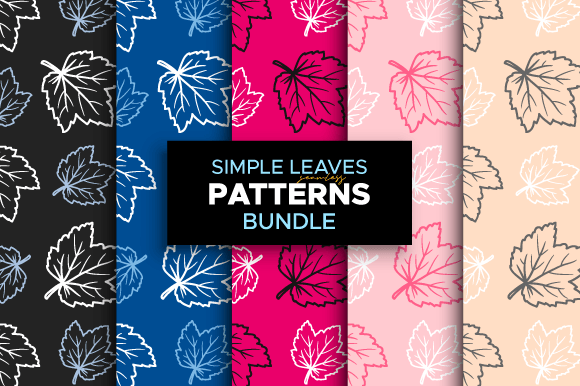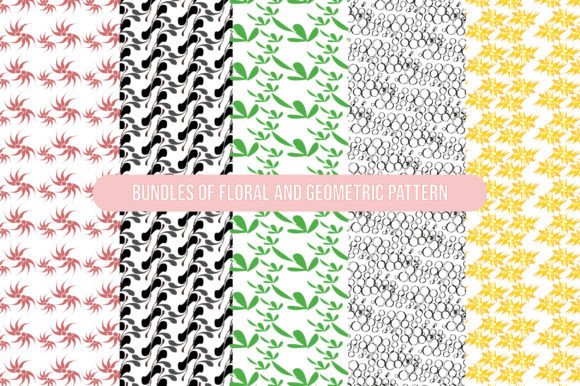
Floral and Clothing Seamless Patterns
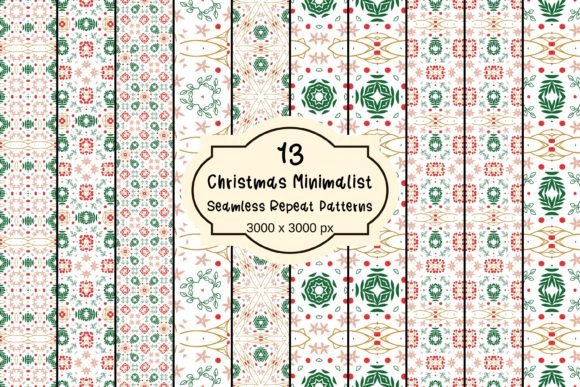
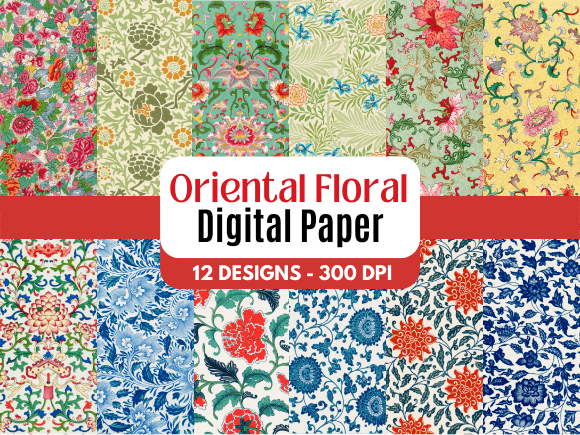
If you’ve ever spent hours trying to tile a floral motif across fabric without visible seams—or struggled to scale a delicate botanical design for wallpaper without pixelation—you already know how much time and precision seamless patterns save. Floral and Clothing Seamless Patterns isn’t just another clipart pack. It’s a thoughtfully crafted, repeatable vector template built for real-world use: blooming plants, golden branches, and organic leaves arranged in an elegant, non-repeating rhythm that flows naturally across any surface.
This isn’t “pretty but impractical.” The design balances luxury with functionality—rich gold accents grounded in soft greens and muted florals, all embedded in clean vector paths. Because it’s delivered in Illustrator AI (CC and CS6), EPS (CC and CS6), and RGB at 300dpi, it works whether you’re prepping for digital textile printing, laser-cutting packaging, or exporting high-res assets for a Shopify product mockup.
When and where these patterns actually get used
Think about the last time you saw a boutique dress label, a boutique stationery set, or even a café’s custom napkin design. Chances are, a seamless pattern was behind it—not as decoration, but as infrastructure. That’s where Floral and Clothing Seamless Patterns becomes quietly indispensable.
A freelance fashion illustrator uses it to mock up sleeve details on a client’s new summer collection—scaling the pattern to match garment proportions without distortion. A small-batch ceramicist applies the same file to wrap a limited-edition mug series, adjusting only the color mode (CMYK for print, RGB for web previews) while keeping the branch-and-bloom rhythm intact. No repositioning. No patching gaps. Just one click to tile, then export.
It’s also the kind of asset educators reach for when teaching pattern-making fundamentals. Instead of spending class time troubleshooting alignment or explaining why raster files break at large sizes, they drop the vector into a lesson on repeat units—and students immediately see how golden stems connect across edges, how leaf density affects visual weight, and how subtle variations in petal placement prevent monotony.
Real people, real projects
A blogger launching a slow-living newsletter doesn’t need a full branding suite—just consistency. She uses the floral vector as a subtle background for her email header, then reuses the same file (with a light opacity shift) as a watermark on downloadable recipe cards. Because it’s seamless and vector-based, she resizes it freely—from mobile preview to desktop banner—without ever worrying about blur or mismatched edges.
A wedding stationery designer working with a couple who loves botanical gardens but hates “cliché florals” tweaks the gold tone to antique brass and layers it beneath hand-lettered vows. The result feels luxe but not stiff—organic, intentional, and scalable across invitations, menus, and thank-you notes. No need to redraw motifs for each format; the repeat does the heavy lifting.
A hobbyist sewing masks during flu season prints the pattern onto cotton-linen blend fabric using an inkjet printer with fabric sheets. Because the design is optimized at 300dpi and built for textile repeats, the branches align cleanly across seam allowances—even on curved edges like ear loops. It’s not haute couture, but it’s joyful, cohesive, and quietly professional.
What makes this more than just “another floral pack”
Most floral vectors prioritize prettiness over practicality: too dense for small-scale fabric, too rigid for wallpaper bleed, or built in low-res PNGs that pixelate when enlarged. Floral and Clothing Seamless Patterns solves those friction points by design:
- No guesswork on tiling: The repeat unit is precisely calculated—no manual offsetting or trial-and-error snapping in Illustrator.
- True multi-surface readiness: Works equally well on silk scarves, kraft paper gift wrap, or matte-finish wall murals because it’s resolution-independent and color-mode flexible.
- Subtle luxury, not loud opulence: Golden branches add warmth and dimension without overwhelming—ideal for brands avoiding “overdesigned” fatigue.
- Editing-friendly structure: Layers are named and grouped logically (e.g., “Stems,” “Leaves,” “Bloom Accents”), so swapping colors or hiding elements takes seconds—not hours.
Before you download or buy—what to consider
Not every floral pattern fits every project—even elegant ones. Ask yourself:
- What’s your output medium? If you’re screen-printing on dark fabric, check whether the gold is built as a spot color or rich black + yellow overlay. This pack uses RGB for digital flexibility, but most print houses will need a CMYK conversion—something easy to do in Illustrator, but worth confirming before finalizing production.
- How much control do you need over density? The base repeat is balanced for mid-scale applications (e.g., dresses, tote bags). If you’re designing micro-print blouses or oversized wall murals, test how the pattern behaves when scaled down 30% or up 200%. Vector means it’ll hold up—but visual rhythm may shift slightly.
- Do your brand guidelines allow metallic tones? Gold here is a warm, muted tone—not foil-stamped shimmer. It translates beautifully to digital and most fabric dyes, but if your palette strictly prohibits metallics, you can easily recolor the branches to deep olive or charcoal.
Also worth noting: because it’s delivered in both CC and CS6 formats, it’s accessible to users on older versions of Illustrator—no subscription required. That matters for educators with school-licensed software, freelancers using legacy machines, or hobbyists who prefer stability over constant updates.
Why “seamless” isn’t just a buzzword here
You’ll hear “seamless” applied to everything from stock photos to Spotify playlists. But in pattern design, it means something concrete: no visible breaks, no awkward jumps, no repeated stems that look like clones instead of companions. In Floral and Clothing Seamless Patterns, the golden branches curve *into* the repeat edge—not just stop at it. Leaves overlap the boundary with intention. Blooms vary subtly in size and orientation so the eye moves fluidly, not mechanically.
That attention shows up where it counts: when a tailor matches the pattern across a jacket lapel and sleeve, when a printer tiles it across a 10-foot-wide mural without ghost lines, or when a student finally grasps how repeat units function—not as theory, but as a tool they can adjust, adapt, and trust.
At its core, this isn’t about filling space with flowers. It’s about giving creators a reliable, beautiful foundation—so they spend less time fixing alignment and more time making things that matter.