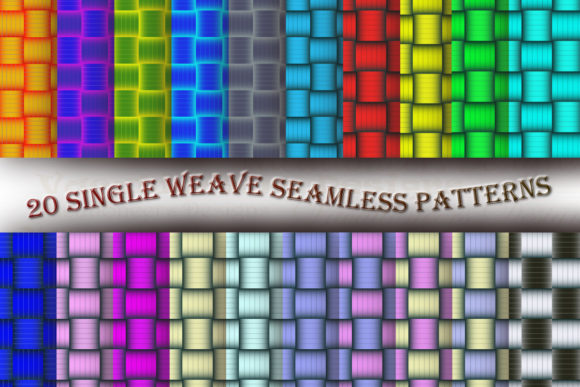
20 Digital Seamless Weave Patterns
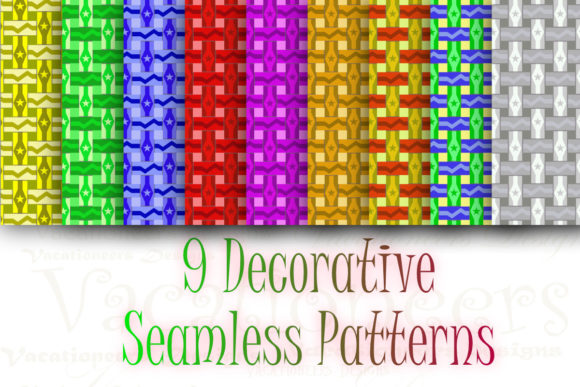
Seamless texture design has quietly reshaped how creators approach digital surfaces—from website backgrounds and social media templates to packaging mockups, apparel prototypes, and presentation decks. At the heart of this shift is a practical need: high-quality, scalable, repeatable patterns that integrate effortlessly into real-world workflows. The 20 Digital Seamless Weave Patterns collection meets that need with precision. Each pattern is built around a single-weave structure—clean, legible, and rhythmically balanced—then refined with subtle vertical and horizontal stripe enhancements that add depth without visual noise. Delivered as 20 individual PNG files in a lightweight ZIP archive, the set prioritizes compatibility, clarity, and creative flexibility.
Why seamless weave matters now
Weaving isn’t just a textile technique—it’s a language of repetition, rhythm, and structure. In digital design, that language translates into reliability. Unlike tiled JPEGs or poorly aligned repeats, true seamless patterns eliminate visible seams at any scale, whether stretched across a full-screen hero section or scaled down to a 32×32 favicon background. That reliability has become non-negotiable. Designers no longer manually stitch tiles or tweak offsets; they expect plug-and-play assets that behave predictably inside Figma, Adobe Photoshop, Canva, or Webflow. The 20 Digital Seamless Weave Patterns respond directly to that expectation—each file is pre-tested for edge alignment, optimized for transparency (where appropriate), and sized at industry-standard resolutions (typically 2048×2048 px or similar) to support both web and print-ready use cases.
This shift reflects broader changes in how professionals work. Freelancers juggle five client projects simultaneously and can’t afford asset delays. Educators building course modules need instantly recognizable, accessible textures—not generic stock fillers. Small business owners designing Shopify banners or email headers want distinction without complexity. A single-weave base provides that foundation: it’s legible at small sizes, neutral enough to pair with typography or photography, and distinctive enough to convey craftsmanship. The added vertical and horizontal stripe detail introduces gentle contrast—enough to suggest movement or materiality, but never so bold that it competes with content.
From craft tradition to digital utility
Weave patterns have long carried cultural and functional meaning—from linen’s breathability to herringbone’s durability—but their digital reinterpretation isn’t about nostalgia. It’s about distillation. These 20 patterns don’t mimic physical looms; they reinterpret weave logic through pixel-perfect geometry. Each pattern isolates one core structural idea—a basket weave variant, a twill progression, a plain-weave grid—and enhances it with directional stripes that reinforce orientation and flow. That intentionality makes them more than decorative: they’re compositional tools.
Consider how a marketer might use Pattern #7: a tight, low-contrast single-weave with faint horizontal striations. Applied as a subtle overlay on a product photo, it adds tactile warmth without obscuring detail—ideal for sustainable brands emphasizing natural materials. Or how an educator could apply Pattern #14—a wider-spaced weave with stronger vertical emphasis—to a slide background, creating visual hierarchy that guides the eye downward through bullet points. These aren’t “backgrounds” in the passive sense; they’re active design decisions with functional consequences.
Real workflow integration—not just aesthetics
What separates useful pattern libraries from disposable downloads is integration depth. The 20 Digital Seamless Weave Patterns are built for actual use, not just inspiration. PNG format ensures universal support—no color profile surprises, no compression artifacts, no alpha-channel guesswork. Designers can drag them straight into layers, apply blending modes (Multiply for subtle texture, Overlay for tonal lift), or use them as clipping masks over gradients. Developers can reference them in CSS background declarations with background-repeat: repeat, confident the tile will align cleanly at any viewport width.
That interoperability supports evolving habits. Remote collaboration means assets must be self-contained—no linked fonts, no missing layers, no external dependencies. A ZIP file with 20 clearly named PNGs satisfies that requirement without friction. No installation, no subscription, no watermarks. Just immediate access to variation: some patterns lean minimalist (thin stripes, near-monochrome), others introduce gentle tonal shifts (soft greys layered over warm off-whites), and a few explore restrained contrast (charcoal stripes against oatmeal). This range allows users to match tone—not just color—to their project’s voice.
Who benefits—and how
- Freelance designers use these patterns to accelerate mockup delivery—applying consistent texture language across brand guidelines, UI kits, or pitch decks without rebuilding from scratch each time.
- Educators and trainers incorporate them into handouts or LMS interfaces to improve visual scanning and reduce cognitive load—subtle texture helps group related content blocks without heavy borders or shadows.
- Small business owners leverage them for DIY marketing: adding quiet sophistication to Instagram story templates, Etsy banner headers, or printed thank-you cards—without hiring a designer for every iteration.
- Bloggers and content creators apply them as article dividers, sidebar accents, or newsletter background elements—creating visual continuity across platforms while maintaining readability and fast load times (PNGs remain compact when optimized).
- Product managers and UX writers use them in wireframe annotations or user journey maps—not as decoration, but as spatial cues: vertical stripe density can imply progression; horizontal rhythm can signal parallel steps.
Trends that shaped this collection
Three converging currents made this kind of pattern library timely. First, the rise of intentional minimalism: audiences increasingly reject visual clutter, but still crave sensory richness. A single-weave pattern delivers that—structured, calm, and materially suggestive—without competing for attention. Second, the normalization of cross-platform consistency: users expect the same brand texture whether viewing a landing page on mobile, a PDF report, or a printed brochure. Seamless PNGs scale and translate reliably where vector-only or font-based solutions falter. Third, the growing emphasis on design sustainability: reusing well-crafted, ethically sourced assets reduces redundant creation cycles—both in time and environmental cost (fewer render passes, smaller file transfers, less storage bloat).
These aren’t abstract trends—they’re daily constraints. A blogger optimizing Core Web Vitals needs lightweight assets that don’t trigger layout shifts. A nonprofit designer building bilingual flyers needs patterns that remain legible when translated into right-to-left layouts—where horizontal stripe direction becomes a subtle anchor. A product photographer using these patterns as backdrop overlays needs predictable contrast ratios for accessibility compliance. The 20 Digital Seamless Weave Patterns were developed with those constraints in mind—not as theoretical ideals, but as operational realities.
Getting the most out of the collection
Start by exploring contrast behavior: apply the same pattern at different opacity levels (15%, 30%, 60%) over varied base colors. You’ll notice how stripe emphasis shifts—sometimes receding, sometimes emerging—as luminance changes. That responsiveness makes them adaptable, not rigid. Next, test layering: place one pattern in Multiply mode over a soft gradient, then another in Screen mode above it. The interplay of stripe direction creates emergent rhythm—vertical over horizontal yields a subtle grid; horizontal over horizontal reinforces flow.
Avoid over-application. One well-placed pattern element—like a textured header bar or a bordered content card—often communicates more than saturating an entire layout. And remember: these are tools, not prescriptions. If Pattern #3 feels too dense for your brand’s voice, try Pattern #11 instead—it uses identical weave logic but with wider spacing and softer edges. Variation lives in restraint, not volume.
The 20 Digital Seamless Weave Patterns don’t promise transformation. They offer reliability, clarity, and quiet distinction—qualities that compound over time, across projects, and through iterations. In a landscape where attention is fragmented and expectations are high, that kind of grounded utility is increasingly rare—and increasingly valuable.